


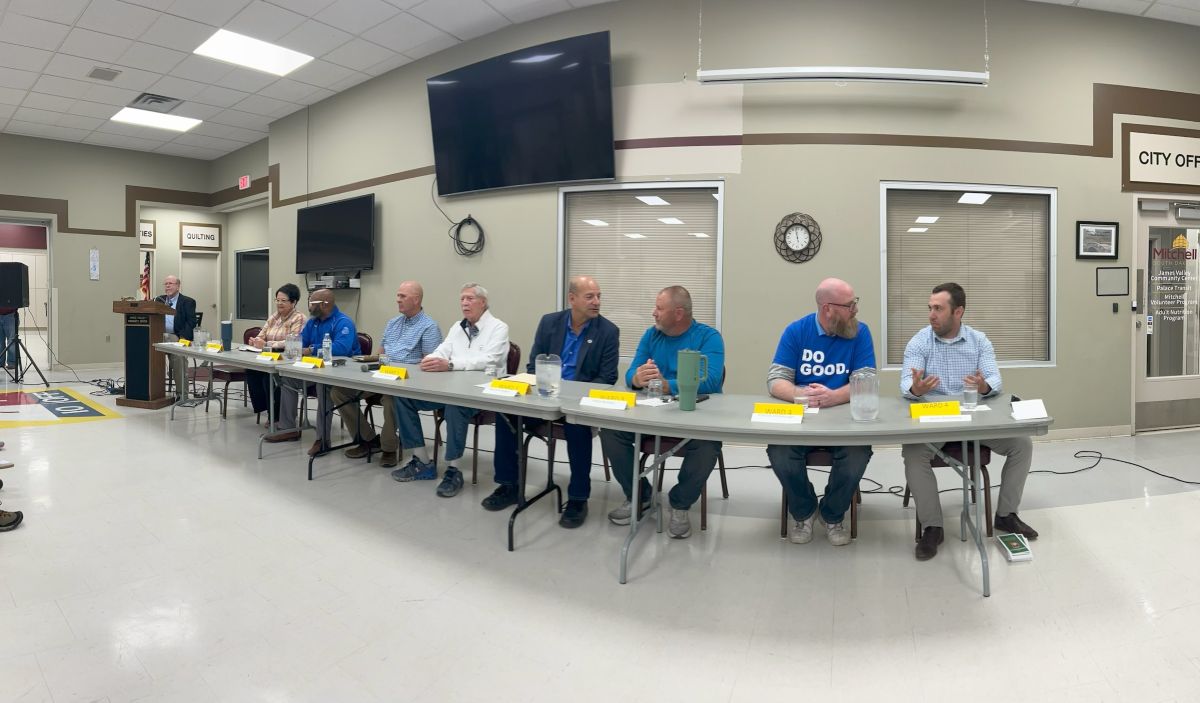

MITCHELL, SD (Mitchell Now) — Candidates running for Mitchell City Council gathered April 15 at the James Valley Community Center to introduce themselves and share their priorities for the community ahead of the upcoming election. Representing all four wards, the candidates outlined their backgrounds and reasons for running before taking part in a structured forum.
Meet the Candidates
Ward 1
- Sarah Deakins
- Tim Goldammer (Incumbent)
Ward 2
- Shaun Davis
- Jay Schreurs
- John Doesher (Incumbent)
Ward 3
- Ken Schlimgen
- Mike Bathke (Incumbent)
Ward 4
- Patrick McGeough
- Jason Greenway
Candidates from all four Mitchell wards shared priorities on housing affordability, economic growth, and city leadership during today’s forum. They also discussed key differences on term limits and development strategies. Below are the questions they were asked and each candidate’s answer.
Are you in support of city council term limits?
Sarah – Yes. Believes term limits would bring better representation and new ideas, emphasizing that “nothing changes if nothing changes.”
Shaun – Yes. Supports giving opportunities for change and bringing in different ideas.
Jay – Yes. Noted that even if someone terms out, they can run again in the future—serving isn’t permanently closed off.
John – Not in favor. Believes voters should decide. Sees value in experienced council members but would support it if the majority of voters choose it.
Ken – Not in favor. Compared it to Central Electric’s board, which has no term limits. Believes decisions made today impact future generations and should not be limited by term restrictions.
Mike – Yes. Feels term limits should have been implemented by the council already. Believes they create opportunities for others, noting that without those opportunities, people may leave the community.
Patrick – Yes. Supports term limits at all levels of government.
Jason – Undecided. Wants to weigh the pros and cons, balancing experience with length of service.
Tim – Mixed. Supports term limits at the national level but is unsure at the city level, noting low voter turnout (around 400 votes) in his ward.
With room for 1,000 more students but unfilled jobs, how do we grow Mitchell’s economy and workforce?
Sarah – She shared concern that opportunities have been missed, including turning down outside agencies that could bring in jobs and businesses. She also noted that residents often compare Mitchell to places like Yankton for shopping options and believes a stronger retail mix would help attract and retain people.
Shaun – He feels Mitchell lacks activities for young families. Highlighted DWU’s host family program as a way to retain students after graduation. He supports ideas like an indoor sports facility to strengthen community appeal.
Jay – He shared that he chose to stay in Mitchell because of its small-town feel and parks. He also noted that remote work opportunities (like his wife’s) can help attract and retain residents.
John – He pointed out that smaller class sizes are also due to changing family trends, with families having fewer children today.
Ken – He acknowledged the challenge, noting there are already open jobs that aren’t being filled and uncertainty around what additional strategies haven’t yet been tried.
Mike – He emphasized the need for higher-paying jobs, noting a decline of about 160 students last year. Believes an indoor sports facility could help attract families, but feels it ultimately comes back to wages.
Patrick – He highlighted Mitchell’s proximity to Sioux Falls and the need to draw people in. He also called for removing roadblocks to growth, increasing wages, and creating more economic opportunities.
Jason – He described it as a two-part issue: filling current job openings while also attracting new residents. He pointed to affordable housing and career growth opportunities as key factors.
Tim – He is focused on retention, especially keeping MTI and DWU graduates in Mitchell. He also noted they often leave due to lower wages and a lack of activities. He suggested connecting students with local jobs and improving the quality of life to keep them here.
Should new subsidy money be allocated for non-profits?
Sarah – She expressed concern about large amounts of funding being distributed without clear reporting or demonstrated outcomes. She emphasized the need for accountability.
Shaun – He supports funding for nonprofits like CASA and Safe Place, recognizing the positive impact they have in the community.
Jay – He wants clarity on who the funding benefits, along with stronger accountability and outcome reporting.
John – He stated that all nonprofits must submit applications and are reviewed. Will continue evaluating requests through that process.
Ken – He supports careful scrutiny of funding. He suggested maintaining current support while considering partnerships with organizations like United Way, which already have structured application and review systems.
Mike – He shared that he previously proposed a 30–35% reduction in nonprofit subsidies. Raised concerns about the lack of measurable success outcomes and transparency. 50,000 was given away by a nonprofit, but the success rate is not known. He also noted the challenges with how development corporations’ efforts are perceived by new businesses.
Patrick – He would review proposals individually but indicated that an overall reduction in subsidies could be appropriate.
Jason – He highlighted organizations like Habitat for Humanity as examples of nonprofits with strong checks and balances and expressed appreciation for city support.
Tim – He evaluates each application on its own merit. He also supports funding for organizations like CASA and Safe Place when they align with community needs but has voted against others that did not. He feels subsidies help nonprofits meet their mission and vision.
Closing Statements
Sarah – Wants to represent the average citizen in Mitchell, bringing new ideas and fresh perspectives. Believes she can’t complain about issues unless she’s willing to step up and help make the city better.
Shaun – Shared that he is an example of the growth discussed—coming to Mitchell for college, choosing to stay, and now giving back. Encouraged others that if they want change, they need to be part of creating it.
Jay – Said he decided to run because he didn’t want to complain without taking action.
John – Encouraged residents to reach out, noting his contact information is available on the city website and he is accessible by phone.
Ken – Wants to stay active in the community after retiring in June and be part of shaping Mitchell’s future.
Mike – Shared he committed to serving six years and will complete that promise, with three years remaining if elected . Highlighted his 100% meeting attendance and said strong leadership means taking ideas and moving forward together.
Patrick – Emphasized the opportunity for new faces and new ideas, encouraging citizens to get out and vote.
Jason – Expressed pride in the community and a desire to make Mitchell the best place possible for future generations.
Tim – Shared his involvement in the community since moving to Mitchell 12 years ago, including work at DWU and MTI, and service on the ACT Board, Corn Palace Board, and his church board.
The forum offered a comprehensive look at where each candidate stands on key issues facing Mitchell, giving residents insight into the choices on the ballot. With perspectives ranging from maintaining current policies to introducing new approaches, voters now have the opportunity to consider each candidate’s priorities and vision before heading to the polls.
Correction: Mitchell Now correct the spelling of Tim Goldammer’s name and added him as an incumbent.