


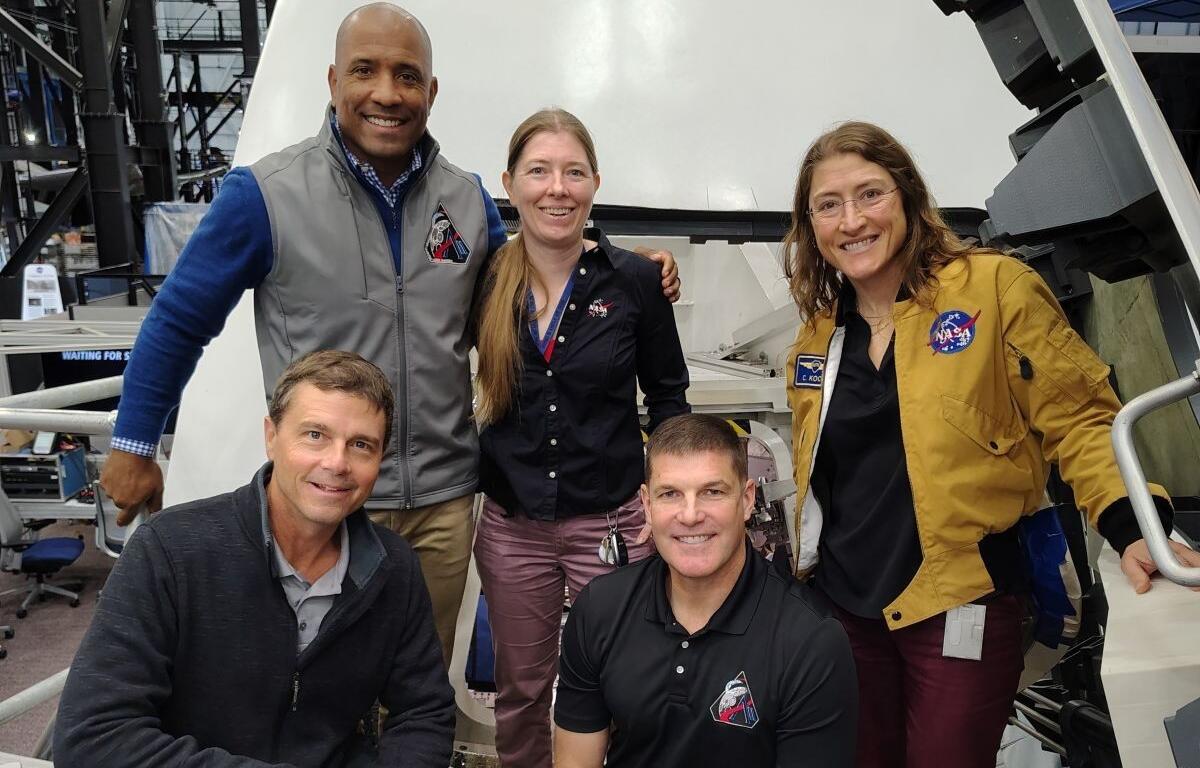

MITCHELL, SD (Mitchell Now) – A Mitchell native is making history with NASA’s Artemis II team, playing a key role in one of the most important space missions in recent years.
Katrina Willoughby, who graduated from Mitchell High School, works as an imagery expert supporting astronauts before and during the mission. She selects camera systems, designs training programs, and teaches astronauts how to capture the famous photos we see from space.
Artemis II is the first mission to send people beyond low-Earth orbit since 1972. Teams like Willoughby’s help make it a success by capturing and preserving these historic moments in photos.
From Mitchell to Mission Control
Katrina Willoughby’s path to NASA started in Mitchell, where she discovered a love for photography through photographing 4-H projects and hands-on experiences. Since her high school didn’t offer photography classes, she did an independent study, which set her on the path to her unique career.
She later attended Rochester Institute of Technology, where a connection from the school’s alumni network led her to an unexpected opportunity. A job related to NASA imagery was shared with students, and she said she “didn’t even know existed” until then.
“I had no idea this was a career path,” Willoughby said. “The opportunity came through my college, and I just happened to be the one who got the interview.”
Now, she plays a key role in training astronauts in both the technical and creative sides of photography. She teaches them everything from camera settings to capturing important moments in space. This work has shaped the visual story of the Artemis II mission.
Beyond Artemis II: Supporting Astronauts Every Day
Although her work on Artemis II has received national attention, Katrina Willoughby’s role at NASA goes well beyond just one mission.
She has spent years helping astronauts on the International Space Station, where photos are important for documenting scientific research, daily life, and views of Earth. She develops camera systems, creates training materials, and works directly with astronauts to make sure they can use the equipment in space.
“I’ve worked on the Space Station for years, so I am used to training astronauts,” Willoughby said, noting that her classes are highly hands-on and focused on real-world scenarios.
Astronauts learn everything from basic photography, like shutter speed, aperture, and ISO, to advanced techniques for the special lighting in space. Training also includes practice inside spacecraft mock-ups that match the size, layout, and lighting of real missions.
Her job continues after astronauts launch. During missions, Willoughby supports them from the ground by helping solve equipment problems, answering questions, and making sure important photos are taken.
Whether she is documenting science experiments on the space station or capturing people’s return to the moon, her work helps preserve history, one photo at a time.
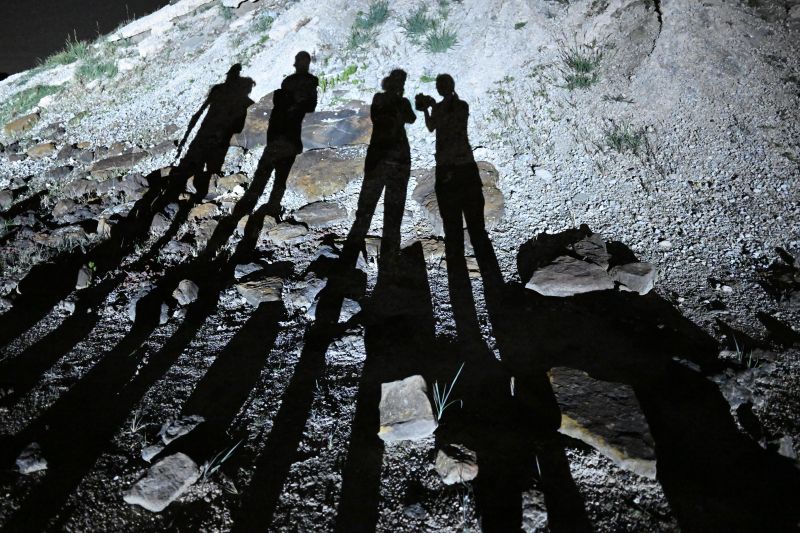
A Memorable Moment
For Willoughby, some of her most memorable moments came not just from Artemis II, but from many years of helping with missions in orbit.
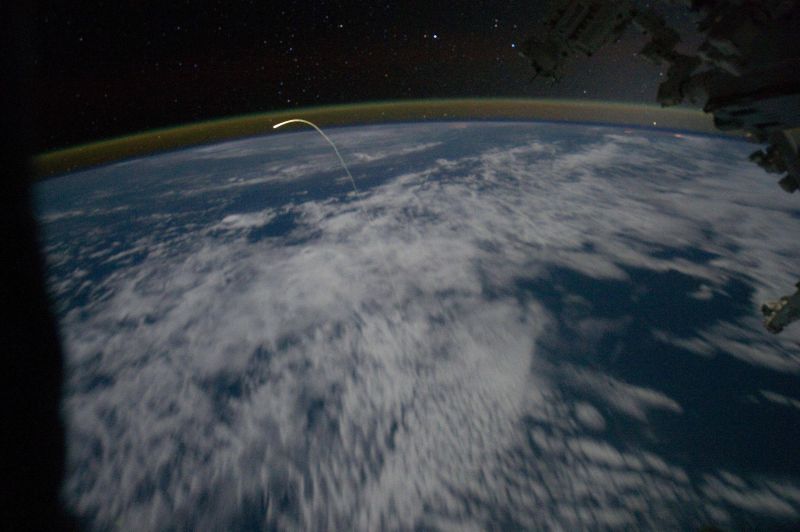
One moment that stood out was when astronauts on the International Space Station realized they would fly directly over the Space Shuttle as it reentered Earth’s atmosphere. Willoughby was suddenly asked to help the astronauts capture this rare and brief event.
“I had no idea how bright it would be or how long it would last,” she said. “But I knew it was low-light imagery.”
Using her experience, she gave the crew advice. They ended up with a series of amazing photos showing the shuttle’s glowing plasma trail across the night sky.
This moment showed how important her work is in real time—helping astronauts capture history as it happens, sometimes with just seconds to spare.
Preparing for What’s Next: Artemis IV and Beyond
Even though Artemis II is a historic return to deep space, Katrina Willoughby is already looking ahead to what’s next.
Future missions like Artemis IV will bring new challenges. Unlike Artemis II, which was a lunar flyby, these missions will likely include spacewalks and longer work around the moon. Astronauts will need to take photos both inside and outside the spacecraft.
This change means they have to rethink everything, from camera design to how astronauts use equipment while wearing bulky spacesuits. Willoughby and her team are already working on new systems, such as advanced cameras for the moon’s harsh environment and training programs that let astronauts practice in challenging lighting conditions.
“We have to prepare not just for inside the vehicle, but for outside during spacewalks,” she said. She explained that it is much harder to use cameras while wearing a spacesuit and working in extreme light and shadow.
They are already testing equipment and creating new training methods. This work will help future missions continue to record humanity’s return to the moon in even greater detail.
A Message to Mitchell—and the Next Generation
Even though she works on one of NASA’s biggest programs, Willoughby’s advice to people back home is simple.
“I just encourage everybody to find what makes them happy in life,” she said.
For young people in Mitchell and elsewhere, her story shows that careers don’t always follow a straight path and that chances can appear in surprising ways. Her love for photography turned into a job that now helps share the story of space exploration.
Her message is clear: follow what interests you, be open to new chances, and don’t be afraid to try a path you never expected.
Artemis II Images Captured with Help from Mitchell Native


All Images Courtesy of NASA
You can spot the International Space Station with the naked eye as it flies over Mitchell. Download the app to see when the ISS may be overhead: https://www.nasa.gov/spot-the-station/ .